

See auxi in action
your workflows and save you time!
Consultants are feeling the same pressure as any other industry right now. The “do more with less” trend is seeping into the day-to-day leaving consultants feel all the pressure.
Now, teams at firms with 200+ employees are realizing efficiency isn’t optional anymore. It is a requirement.
Hence, AI tools for consultants are becoming a standard part of workflows. Tools that are helping consultants enhance specific consulting tasks, for example converting chat conversations into PDFs or aligning 500-slide decks with brand guidelines. This shift is real. Think of it as the same as going from Excel 2003 to full-stack cloud environments.
But with all the new tools and traditional workflows, its hard to know where to start. What AI tools should you be using as a consultant. Tools that help automate repetitive tasks and not add noise.
We've built you the list. No hype. No history lesson.
Here are 11 AI tools consultants need to learn to be more efficient in 2026.
- auxi
- AlphaSense
- Olive
- Forecast
- Think Cell
- Tableau AI
- Zapier
- Otter.ai
- Junior AI
- Signal AI
- OpenAI ChatGPT
auxi
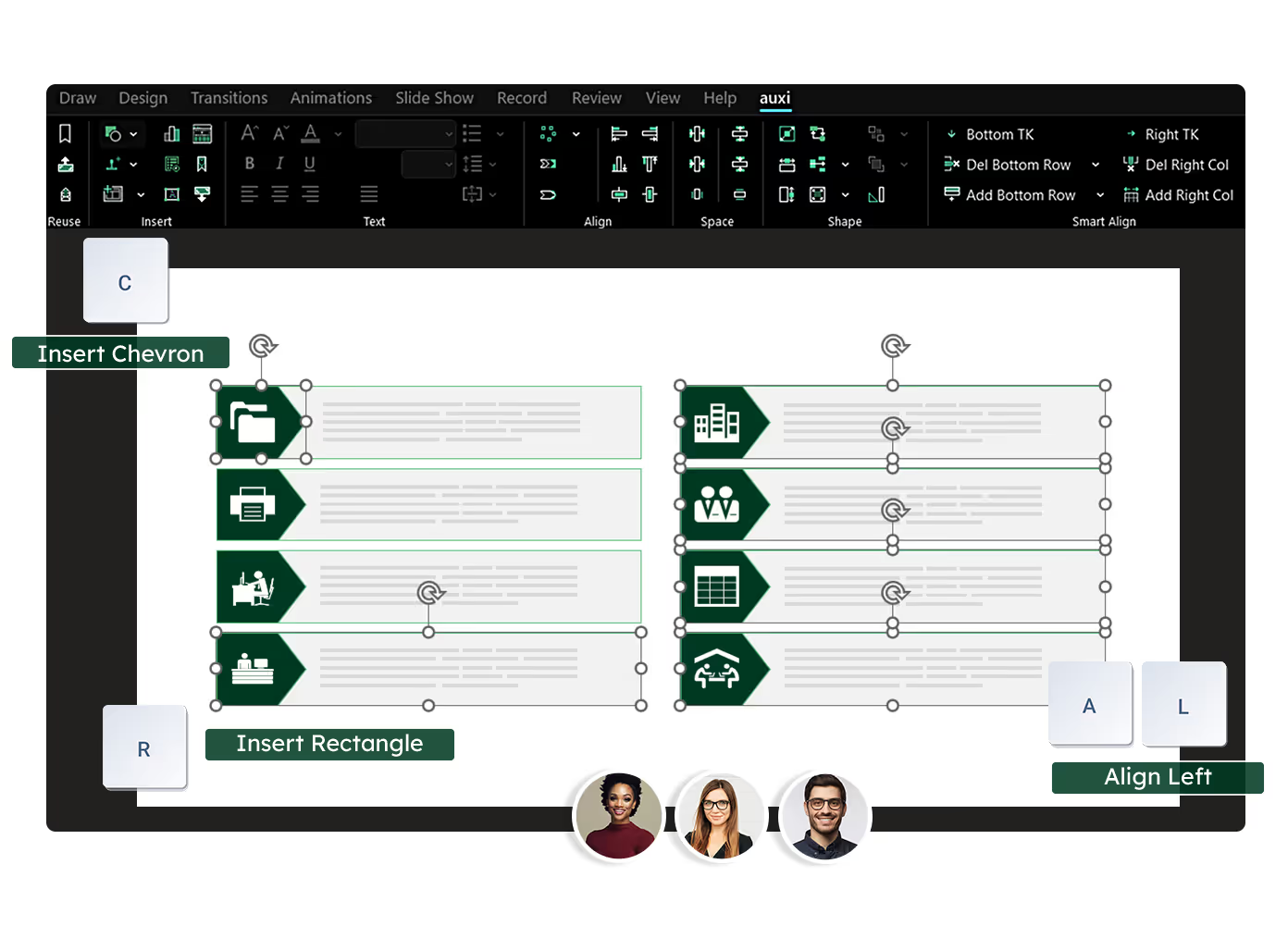
auxi is an AI tool built for consultants, investment bankers and PowerPoint power users who spend hours cleaning slides, aligning elements, writing content and working with complex charts. auxi uses GenAI to automate slide creation and formatting along with many other features.
For teams managing a large volume of client presentations, auxi is a time saver rather than a novelty tool. auxi offers 250+ consulting and finance specific AI features. Features like Smart Alignment, and GenAI features like Create and Edit, auxi helps consultants focus on what matters beyond redundant work.
auxi features
With auxi, consultants can generate complex brand compliant slides from simple AI prompts, fix formatting issues in one click, adjust layouts and get recommendations to help consultants enhance quality and be more efficient with PowerPoint. It accelerates production process without forcing teams to change how they already work.
Why consultants use auxi?
Consultants at large enterprise consulting firms produce 100s of PowerPoint presentations and decks. To cater to their needs around formatting, agenda building, brand alignment and content creation, consultants use auxi.
auxi removes friction by supporting:
- clean, consistent brand compliant slide decks
- 10x faster slide creation
- easy formatting across large decks
Real-world use case
A consultant is working on a 100-page slide deck for a client and requires the deck to align with the client's brand guidelines, wants to create an agenda and automate all content creation along with charts, and matrices in PowerPoint. Using auxi, they can achieve all this in a fraction of the time.
AlphaSense
Used across consulting and investment banking, AlphaSense is a research and market intelligence platform. It uses AI to surface insights from earnings transcripts, equity research, filings, and proprietary datasets. AlphaSense enables consultants to efficiently analyze data from various sources to inform their research and recommendations.
What AlphaSense does?
For consultants, AlphaSense provides rapid access to market signals, competitive intelligence, and sector insights that would normally require hours of manual research. Its search capabilities go far deeper than standard engines, which matters when preparing market scans or board-ready analyses.
Why consultants use AlphaSense?
Consultants rely on AlphaSense for a variety of reasons, including but not limited to:
- Faster competitive benchmarking
- Improved industry landscaping
- Early identification of market risks and opportunities
- High quality source material for client-ready deliverables
Olive
Olive is a procurement and vendor evaluation platform that integrates AI into requirements gathering and decision scoring. Olive can also support proposal generation by automating the preparation of structured, data-driven proposals for clients. This is useful for consulting teams who run technology selections or operational assessments.
What Olive does?
Olive helps consulting teams gather stakeholder requirements, translate them into structured scoring criteria, and compare vendors based on real data. It reduces the manual effort normally spent building RFP matrices.
Why consultants use Olive?
- Streamlined requirements discovery
- Structured vendor comparison
- Reduced risk of subjective or inconsistent scoring
Forecast (AI Project Management)
Forecast is an AI powered project and resource management tool that helps consulting teams model staffing, track budgets, and forecast utilization. It leverages task automation to streamline project workflows, automatically assign tasks, and sync deadlines.
What Forecast does?
Forecast uses machine learning to predict timelines, allocate resources, and identify risks based on project data. For firms managing complex portfolios, Forecast provides real insight into delivery risk before it materializes.
Why consultants use Forecast?
- Improved utilization management, especially across teams of 200 plus employees
- Automated project forecasting
- Early visibility into budget deviations
- Scenario planning for staffing and capacity
Think Cell
Think Cell remains a standard tool in consulting for creating charts quickly in PowerPoint. The new AI enhancements help automate chart creation, reduce formatting friction, and improve data handling. Think Cell enables consultants to efficiently visualize and interpret complex data for client presentations.
What Think Cell does?
Think Cell accelerates the creation of complex charts such as waterfalls, mekkos, and gantts. The AI features help transform raw data into ready to use visualizations without repetitive adjustments.
Why consultants use Think Cell?
- Faster chart creation
- Clean, consistent visuals
- Reduced rework during partner review
Tableau AI
Tableau AI expands Tableau’s capabilities with natural language querying, predictive analytics, and automated insight generation. It helps consulting teams surface patterns that would otherwise require heavy data modeling. Tableau AI leverages data science techniques to analyze large datasets and generate insights that inform consulting recommendations.
What Tableau AI does?
Tableau AI allows users to ask questions in plain language, generate visualizations automatically, and identify trends without deep technical skills. It improves accessibility across non analyst teams.
Why consultants use Tableau?
- Faster insight generation
- Automated data exploration
- Strong support for client workshops and executive storytelling
Zapier
Zapier is an automation platform that connects tools without code. It has become more relevant with the addition of AI powered automation steps. Zapier can also automate routine administrative tasks such as scheduling meetings, helping consultants save time and reduce manual effort.
What Zapier does?
Zapier automates workflows across CRMs, spreadsheets, email systems, and knowledge tools. AI enhancements allow it to classify data, summarize content, or make decisions within workflows.
Why consultants use Zapier?
- Automated data collection
- Faster preparation of internal status updates
- Integration of disparate client tools
Otter.ai
Otter.ai is a meeting transcription and summarization tool used widely across remote and hybrid consulting teams.
What Otter.ai does?
Otter transcribes calls, identifies speakers, and generates summaries or action lists. This increases accuracy in meeting notes and reduces administrative overhead.
Why consultants use Otter?
- Immediate access to structured meeting outcomes
- Reduced time spent documenting discussions
- Reliable records for workshop or steering committee sessions
Junior AI
Junior AI is positioned as an AI copilot for business analysts. It helps consultants draft reports, analyze content, structure deliverables, and work through data heavy tasks.
What Junior AI does?
Junior AI provides assistance with research synthesis, content drafting, and document refinement. It is built for internal workflows rather than client facing outputs.
Why consultants use Junior AI?
- Faster first drafts of internal documents
- Support for synthesis and note consolidation
- Improved junior team productivity
Signal AI
Signal AI is an external intelligence platform designed to surface real time information from news, regulatory feeds, and global signals. It is widely used for risk assessment and corporate reputation monitoring.
What Signal AI does?
Signal AI uses natural language processing to detect patterns and risks across millions of data sources. Consultants and bankers use it for regulatory monitoring, competitive scanning, and geopolitical risk assessment.
Why consultants use Signal?
- Early visibility into reputation or regulatory issues
- Strong coverage for global markets
- Valuable input for risk frameworks and strategy projects
ChatGPT
ChatGPT is a general purpose AI assistant that supports research, analysis, writing, and scenario modeling. It has become a foundational tool across consulting and investment banking teams.
What ChatGPT does?
ChatGPT helps consultants generate outlines, summarize complex information, structure workplans, and accelerate problem solving. Its value increases when paired with domain expertise.
Why consultants use ChatGPT?
- Faster synthesis of research
- Support for brainstorming frameworks
- Custom code generation for data analysis
- Improved productivity across all levels
Benefits of AI Solutions in Consulting
Adoption of AI tools in consulting is transforming the industry all together and not because of hype, but by driving efficiency, accuracy and productivity. Most of the AI tools mentioned in our list are designed to automate repetitive tasks such as data analysis, content creation, and project management. This is freeing up consultants to focus on high-value activities like strategy, client conversations, and contracts.
Leveraging AI through these tools can help consultants make smarter decisions and impactful engagements. But it goes a step further. AI solutions help firms scale operations and streamline consulting workflows, reduces administrative overhead and lots of manual work. In turn, this helps consultants to focus on strategies and clients more.
Firms adopting AI meaningfully are gaining a competitive advantage by delivering faster and by bringing more value to their clients through more human customer relationship management.
Implementing AI in Consulting
With all the hype and noise around AI though, how do you actually implement AI. We see more and more consulting firms trying to figure they should actually start with AI.
The answer is simple.
Hint: Its not LinkedIn.
Consulting firms should begin by identifying areas where AI driven tools can deliver most for their teams. These areas can include areas like slide deck creation, client onboarding or data analysis. This is a crucial step, and gives you the right answers.
Once you know what your AI needs are and the direction, you explore and find tools that would be helpful to solve your specific use case. Here you are considering factors like ease of use, scalability, and integrations with your existing systems to ensure minimal disruption to current consulting workflows. With more clarity, you can build a more structured AI adoption plan. Here you will be running enablement sessions and providing ongoing support to your teams to help adapt. Simultaneously, for many of the tools above, you will also receive a lot of this support.
Cross-organization implementation can seem tricky, however, with the right approach, goals and training, you can implement AI seamlessly.
Will AI Replace Consultants?
While AI tools offer significant advantages, one common concern (and we get asked this a lot!) is whether AI will replace consultants.
And our answer is the same, every time.
AI is not going to replace consultants, but it will help augment consultants and their expertise, not replace it. Simultaneously, it is fair to argue that AI will not replace consultants, but consultants using AI most likely will.
AI in consulting is more about automating routine tasks, removing friction in redundant work and helping consultants be more efficient while consultants focus on higher-level problem solving, client relationships, and strategic thinking.
AI Developments in Consulting
Every day there are new developments in the world of AI. With new tools, LLMs and platforms, it is important stay on track. Keeping up with the latest AI trends can be hard. This is where prioritizing ongoing education and AI training becomes essentials. Whether it is through webinars, conferences, podcasts or event, staying informed helps be competitive.
Investing in research and development allows consulting firms to explore emerging AI applications, such as generative AI, deep learning techniques, and advanced analytics. Building partnerships with AI providers and startups can also provide early access to cutting-edge tools and expertise. By staying up-to-date with AI, consulting firms can leverage the latest technologies to drive business growth, enhance decision making, and maintain a competitive advantage in the consulting industry.
AI tools for consultants are reshaping how teams deliver work. The best tools do not replace expertise. They remove friction so teams can focus on analysis, client management, and decision making.
For firms with more than 200 employees, the shift is accelerating. Teams that embrace AI powered consulting software will shorten delivery cycles, improve quality, and create space for deeper client impact.