
See auxi in action
your workflows and save you time!
A client knows your team uses AI. During the next negotiation, the procurement lead asks for a lower fee. Your partner responds that the client pays for expertise. Both need to get more specific about the engagement.
The effect of AI on consulting fees depends on the agreement: what the firm promises, how the parties measure completion and who carries the uncertainty. Under hourly billing, fewer chargeable hours can reduce the invoice. Under a fixed fee, the firm may retain more of the efficiency gain while remaining responsible for the agreed deliverable.
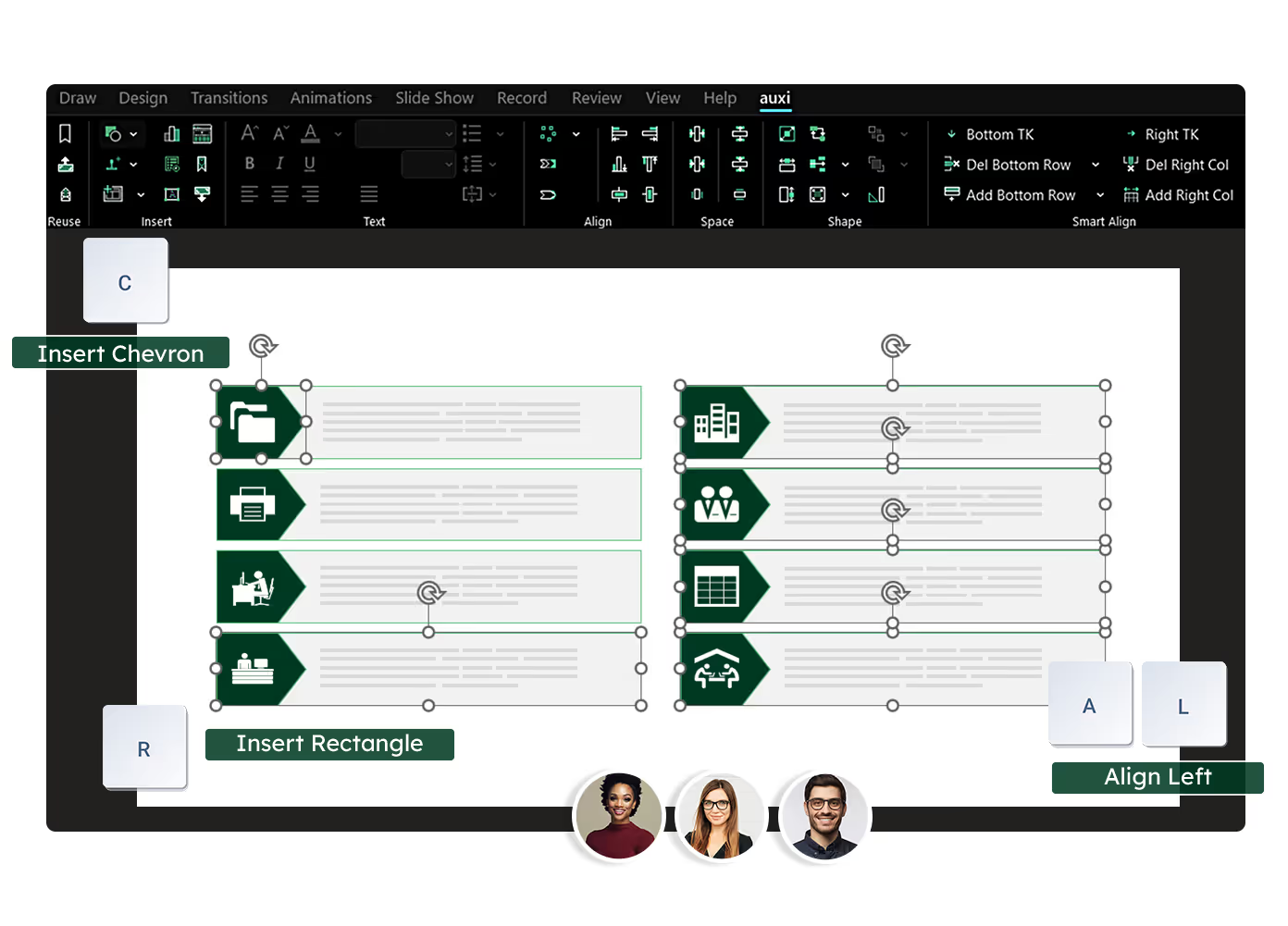
At auxi, we help teams reduce effort in PowerPoint. We think firms should address the commercial implications of that efficiency with clients before a disagreement about the invoice.
Separate the pricing agreement from the production method
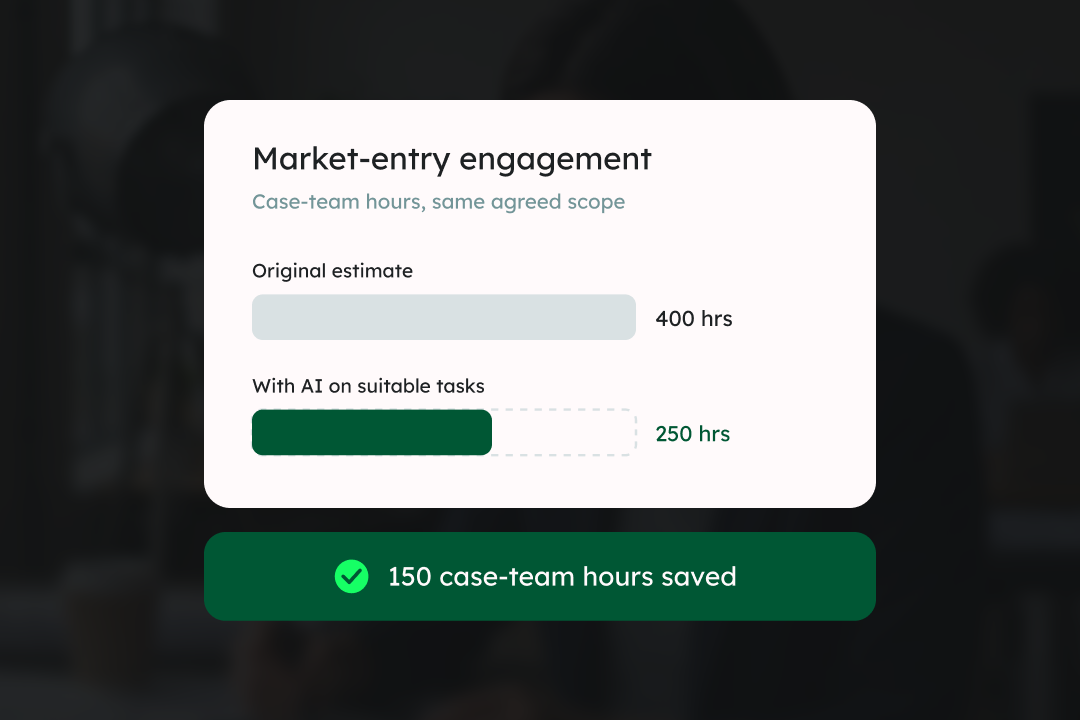
Consider a fictional engagement to assess a market and recommend an entry approach. The partner prices the engagement around a 400-hour case-team estimate across the market assessment and route-to-market workstreams. After introducing AI into suitable tasks, it needs 250 hours to deliver the same agreed quality and scope.
Under an hourly agreement at $200, the firm would invoice $50,000 for 250 chargeable hours, compared with the original $80,000 estimate. Under a fixed fee of $80,000 for the same agreed scope, the partner could retain the fee while using fewer case-team hours to fulfill the commitment.
A hybrid engagement could use a fixed fee for defined workstreams and a separate arrangement for discovery or approved scope changes. The partner and client sponsor would need to agree on those boundaries before the team starts work.
These examples describe alternative agreements. They do not establish what a firm may charge under an existing contract. The partner and client must follow the engagement letter they agreed and resolve changes in scope through that agreement.
A fixed-fee firm also carries downside risk. It may need 550 hours if the client's data is poor or the analysis proves more difficult than expected. A buyer evaluating the price should consider both the potential efficiency gain and the uncertainty the supplier accepts.
Give the client a basis for evaluating value
“You pay for our expertise” leaves a buyer with little to assess. Name the judgment the client needs and explain how the team will support it.
In the market-entry example, the firm might commit to a recommendation that tests unit economics against distributor terms, identifies conditions for a pilot and explains the evidence for choosing one market over another. The buyer can examine the proposed work and decide whether the fee makes sense.
The firm should also distinguish using AI to reduce production effort from changing what it delivers. If the team proposes additional research or scenarios, explain their role in the decision and agree on them. Adding output without discussion gives the buyer no reason to value the extra work.
Use outcome fees where the parties can assign responsibility
An August 2026 working paper examines consulting pricing through the observability of input costs and outcomes. The authors argue for considering hybrid and asset-based arrangements as AI changes how firms produce work. They offer economic analysis rather than a field experiment demonstrating that one model wins across engagements.
A firm might propose tying part of a market-entry fee to first-year revenue. Before accepting, both parties need to address the client's influence over hiring, stock availability and distribution. The consultant may recommend a sound approach while the client delays implementation. The client may achieve strong sales because a competitor exits the market.
The parties need a baseline and an attribution method they both accept. They should specify who controls the actions required to achieve the outcome and how they will handle changes outside either party's control. If they cannot agree, a deliverable or milestone fee may provide a more workable basis for the assignment.
Negotiate the use of the efficiency gain
On repeat engagements, the buyer may have evidence that the supplier's effort has fallen. The supplier may have invested in tools, reusable analysis and training to achieve that improvement. Both can put those facts into the renewal discussion.
They might agree to a lower fee for the same scope or use part of the gain to improve turnaround. A supplier could retain part of the benefit to recover its investment. The appropriate split depends on alternatives and bargaining power as well as production cost.
A practice leader should make this choice with a view of the whole portfolio. Reducing fees can help the firm win suitable work; keeping fees unchanged can fund better service or improve margins. Either decision requires evidence about demand and delivery costs. A count of hours saved cannot settle it.
For us at auxi, a useful productivity discussion includes that next commercial decision. Measure the effort your team recovers, identify the commitments it still owns and enter the client discussion with an explanation of the offer. You will have more to negotiate than an assertion about the importance of expertise.