
See auxi in action
your workflows and save you time!
You ask an AI assistant for a first-cut growth strategy before the case team's problem-solving session. A competing firm asks a similar question using the same public information. Both case teams can produce a polished recommendation to enter adjacent markets, segment customers and improve commercial execution.
The buyer needs to decide which team has understood its situation. An elegant presentation gives the buyer little evidence of that understanding unless the authors explain the choices behind it.
At auxi, we think consulting teams should use the effort they recover in production to strengthen that explanation. AI-assisted consulting differentiation requires relevant evidence and a defensible judgment about what the client should do. A distinctive phrase does little for a buyer who cannot tell why the recommendation fits.
Give the buyer a claim it can examine
Consider a fictional distributor choosing between two geographic markets. A general recommendation to prioritize the larger market leaves several decisions unresolved. The distributor must consider service costs and credit terms, along with its ability to recruit a local team.
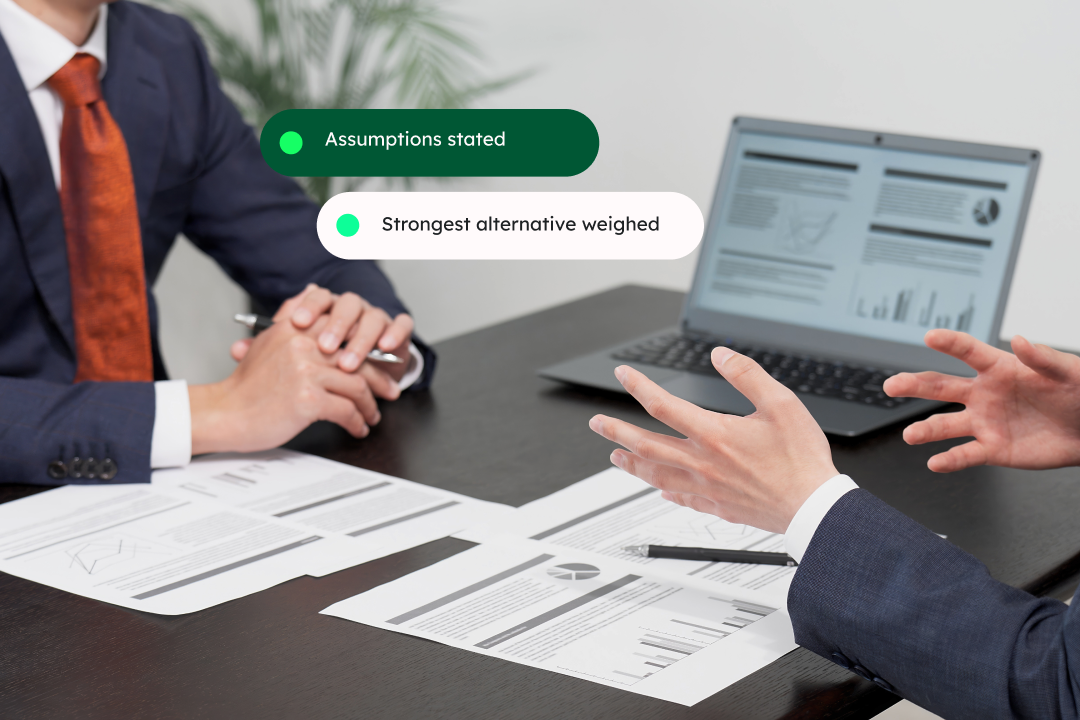
A consultant could recommend the smaller market because the client can serve it from an existing facility and meet customers' delivery requirements. The consultant should state the assumptions: expected order density, transport cost and the credit period the client can support.
The buyer can now challenge the recommendation. It might reveal that the facility has no spare capacity or that local customers expect longer credit terms. The team can revise its analysis around information that affects the choice.
You have given the client a reason to hire the team if it values that analysis. You have also made it possible for the client to disagree on substance.
Treat convergence as a problem to test
A 2023 experiment with consultants found performance gains on some AI-assisted tasks alongside reduced diversity across ideas. The researchers studied particular tasks and an earlier model generation. Their findings support examining convergence; they do not establish that present-day models produce the same consulting recommendations.
You can test your team's output without claiming to replicate that research. Remove the firm name and the decorative language from two recommendations. Ask a reviewer to identify the evidence and decisions that distinguish them. If the reviewer can swap the client names without changing the argument, the authors need to revisit the context.
Do the same with human-written work. Consultants can converge through shared templates and training. Reusing a familiar framework is reasonable if the team tests whether its assumptions fit the assignment.
For a commercial due diligence case, carry the same discipline into the investment thesis. An associate should be able to explain which assumption about the target's growth the customer interviews support, which assumption remains open and how the downside case changes. A sponsor needs that distinction before the investment committee discussion; a polished list of market trends will not answer it.
Use proprietary evidence with an argument for relevance
Internal material can help a team go beyond public summaries. It can also mislead the team if it describes a different client or a market that has changed.
For a benchmark, explain how the sample compares with the client's situation. A margin from an established distributor may offer little guidance for a new entrant. For an interview, record whose perspective the team heard and what incentives that person has. A supplier and a buyer may describe the same channel in different terms.
Confirm that the team has permission to use the material. An author should not turn a confidential client example into evidence for another buyer because an AI assistant retrieved it.
Then connect the evidence to a choice. A table of proprietary numbers can create an impression of authority while leaving the decision unchanged. Your reader should be able to follow the step from observation to recommendation and see the assumptions the team added.
State the condition under which you would change your mind
In the distributor example, the team could recommend the smaller market provided it can use the existing facility without a major capital investment. If the client needs a new site, the team should compare the markets again.
That condition helps the buyer assess both the recommendation and the team's judgment. It also gives the delivery team an instruction to revisit the decision if new information changes the economics.
Ask the authors to record the strongest alternative they considered. Explain the reason for rejecting it and the evidence that could reverse the choice. This practice makes the analysis harder to defend with generic language, whether an AI model or a consultant produced the first draft.
Test the answer in the problem solving session
A principal can run a problem-solving session around a single recommendation. Ask the author to name the decision, identify the decisive evidence and explain the sensitivity to its main assumption. Let a colleague argue for the strongest alternative.
The author can use AI to develop counterarguments or identify missing information. The team still has to examine the evidence and decide which objections deserve a change. Adding a paragraph that acknowledges uncertainty does less than showing the buyer how that uncertainty affects the choice.
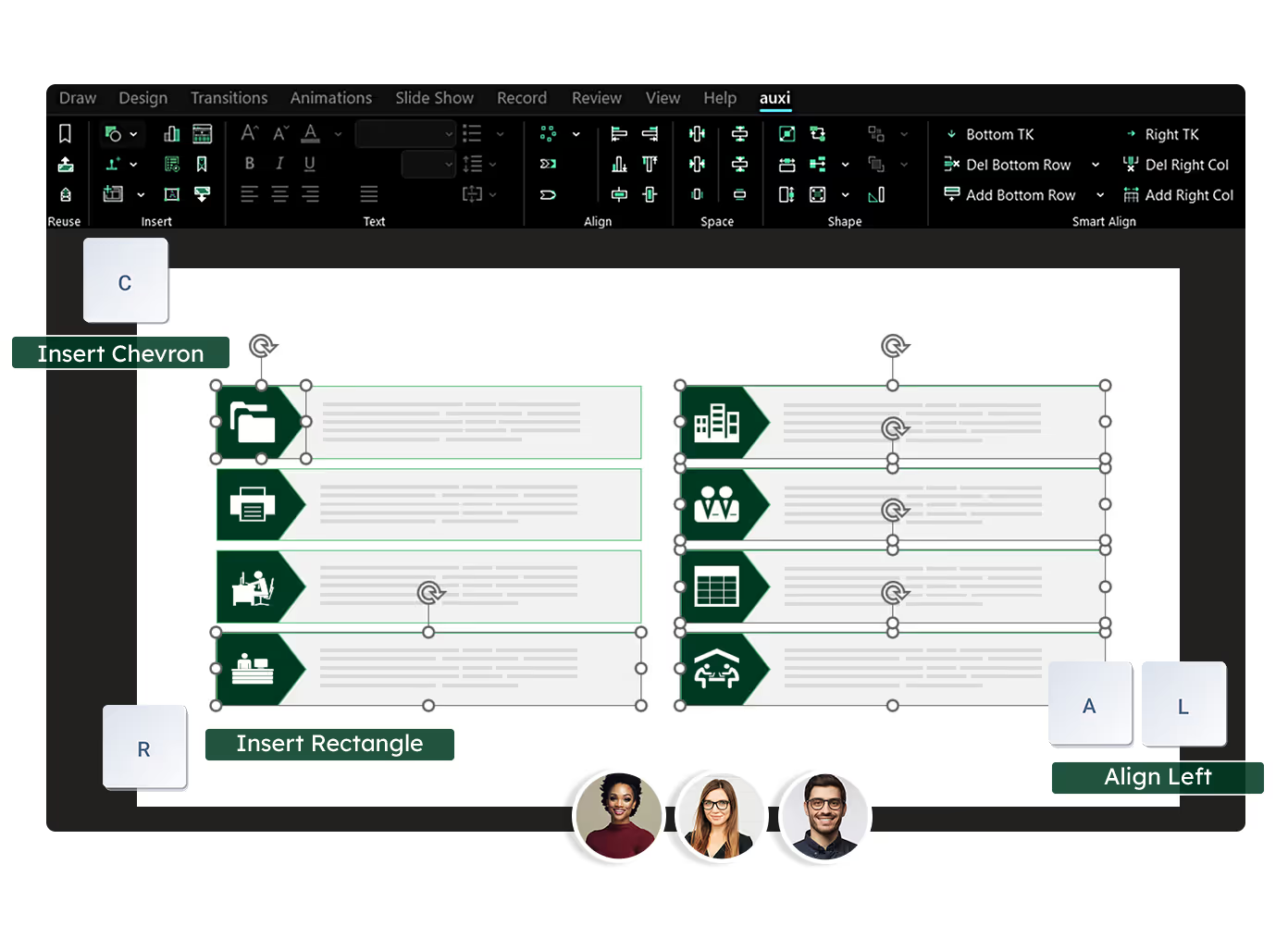
We build auxi for professionals who need to turn their work into presentations. Our view is that teams should preserve the reasoning as they improve the production process. Give the client a recommendation it can interrogate, including the point at which you would advise a different course. That is a useful demonstration of expertise during the sale and after the engagement begins.